Skip to content

God's Own Country

Kerala

From the Arabian Sea to the misty Ghats — palm-lined beaches, glassy backwaters, tea-clad highlands and a deep temple-and-festival culture, threaded into one journey.

The journey

A narrow strip of coast, backwater and mountain

About Kerala

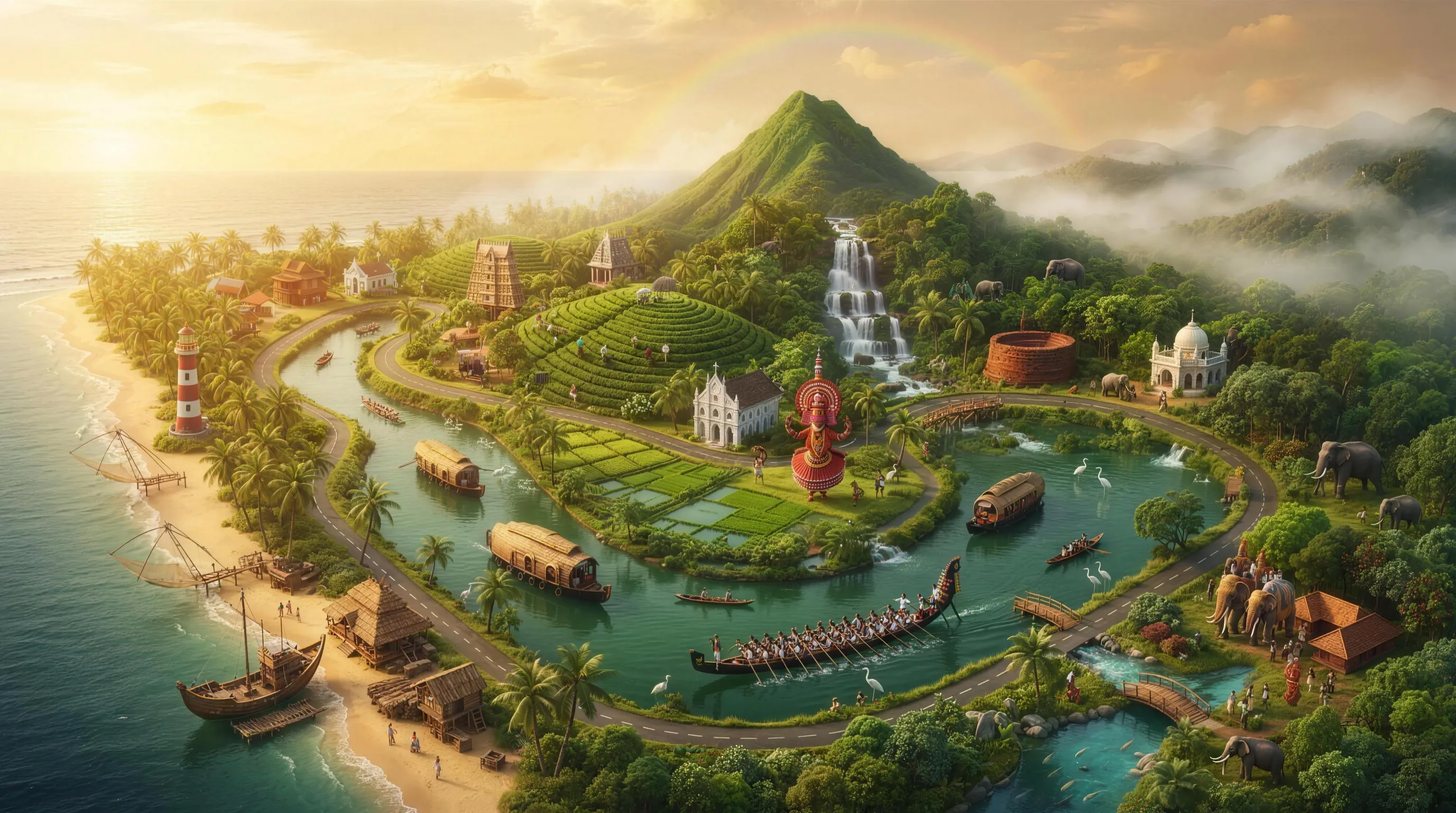
A narrow strip of coast, backwater and mountain on India's southwest edge, Kerala threads palm-lined beaches, glassy backwaters, tea-clad highlands and a deep temple-and-festival culture into one journey. Fourteen districts run the length of it, from the capital's shore in the south to the sea forts of the far north.

0

districts

0 km

of coastline

0

rivers

0 m

Anamudi peak

Ways to travel

6 ways to fall for Kerala

Experiences

The districts are the geography; these are the reasons. Every journey below threads through several — pick a thread and follow it.

A journey measured in ripples, not kilometres.

The Backwaters

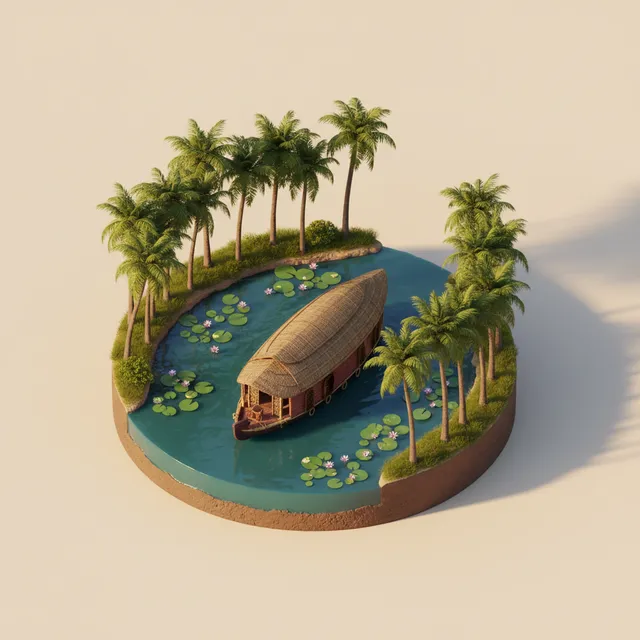
Nine hundred kilometres of lakes, lagoons and canals lie behind the coast, much of it below sea level and all of it navigable at walking pace. Kettuvallam houseboats of thatch and jackwood drift past paddy bunds, toddy shops and church spires, and a night aboard — fish curry, lamplight, still water — remains the state’s defining experience.

One shoreline, a hundred moods.

The 600km Coast

Kerala’s Arabian Sea edge runs nearly 600 kilometres, from the red laterite cliffs of Varkala to a beach in the north you can legally drive on. Between them come lighthouse coves, Chinese fishing nets at harbour mouths and long stretches where the only traffic is a fishing crew hauling in the evening catch.

Where the road climbs into cloud.

Tea Country

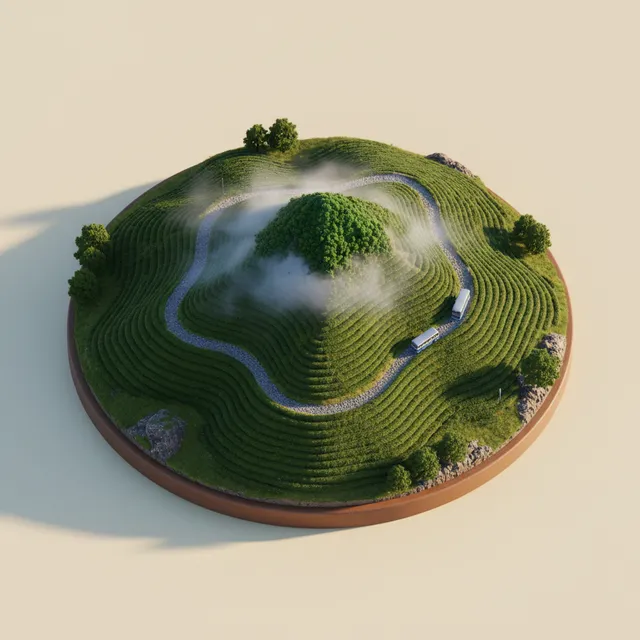
The Western Ghats wall Kerala’s eastern edge, rising past spice gardens to tea estates planted in the 1870s and peaks above 2,600 metres. Mornings here smell of cardamom and wet leaf; mist pours through the passes by afternoon, and the plains feel a country away.

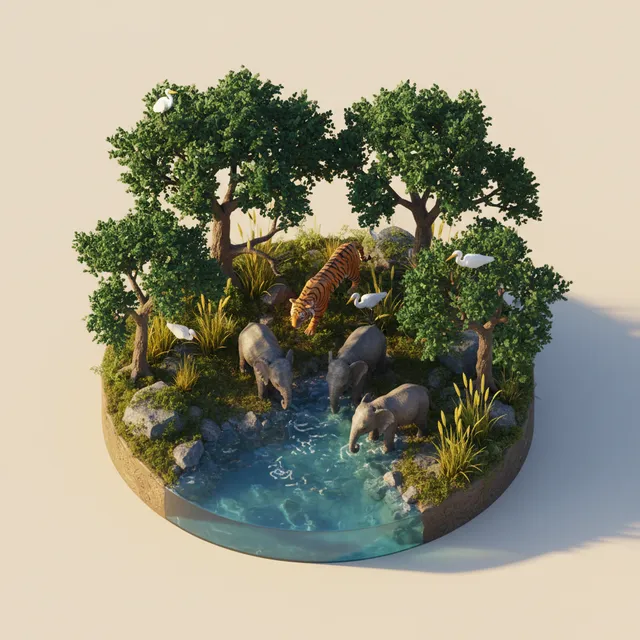
Tiger country, an hour from the tea shop.

The Wild Ghats

The forests of the Ghats hold tiger reserves at Periyar and Parambikulam, elephant herds that come down to the water at dusk, and endemic species — Nilgiri tahr, lion-tailed macaque, great hornbill — found nowhere else on earth. Boat safaris, bamboo rafts and watchtower nights replace the jeep queue.

Where the gods still take the stage.

Ritual & Spectacle

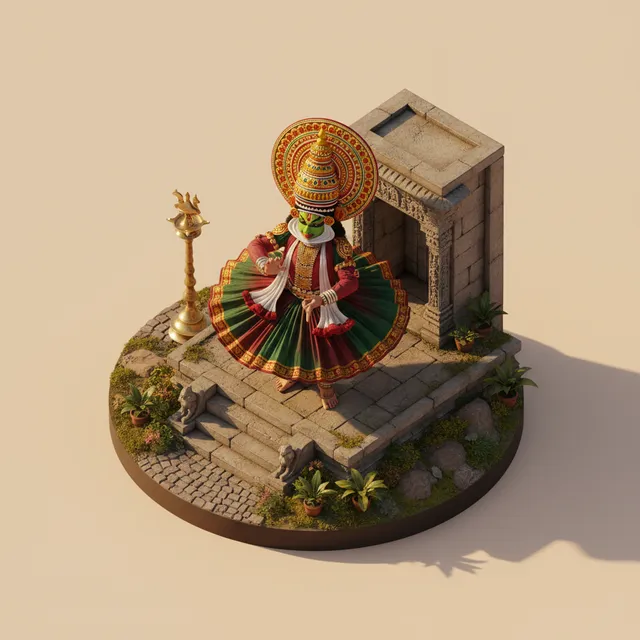
In North Malabar, Theyyam performers in towering headgear are worshipped as living deities through the winter ritual season; in temple towns further south, Kathakali dancers spend hours becoming their characters before a single drumbeat. The calendar peaks at Thrissur Pooram, when caparisoned elephants and duelling percussion orchestras fill the temple ground.

A cuisine built on pepper, coconut and the day’s catch.

The Spice Table

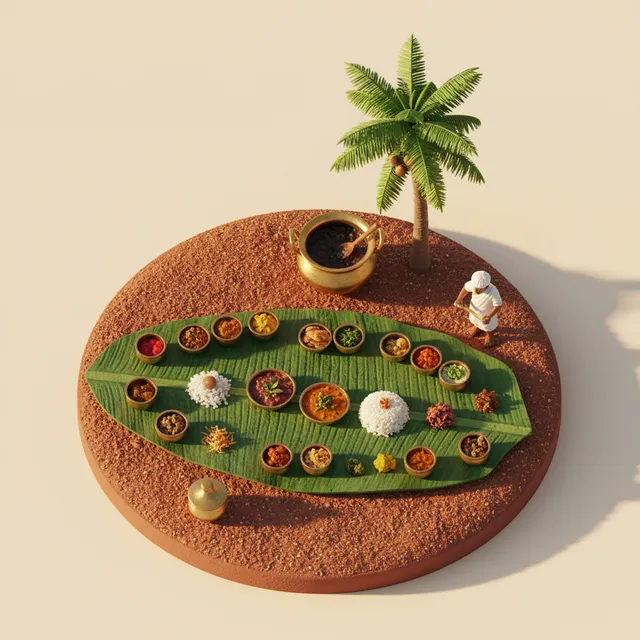
This is the coast that drew the spice fleets, and the kitchen still shows it: karimeen pearl-spot grilled in banana leaf, beef fry with flaky Malabar parotta, biryani perfected in Kozhikode’s tea shops. At festival time it all converges in the sadhya — some two dozen vegetarian dishes served on a banana leaf, eaten with the right hand and finished with payasam.

Chart the route

One Kerala, 14 stops

Journey map

Trace the whole journey, or pick any stop to begin.

ThiruvananthapuramKollamPathanamthittaAlappuzhaKottayamIdukkiErnakulamThrissurPalakkadMalappuramKozhikodeWayanadKannurKasaragod

The festival year

A calendar that never quite sleeps

Scroll the year →

Festivals
August – September

Onam

Statewide

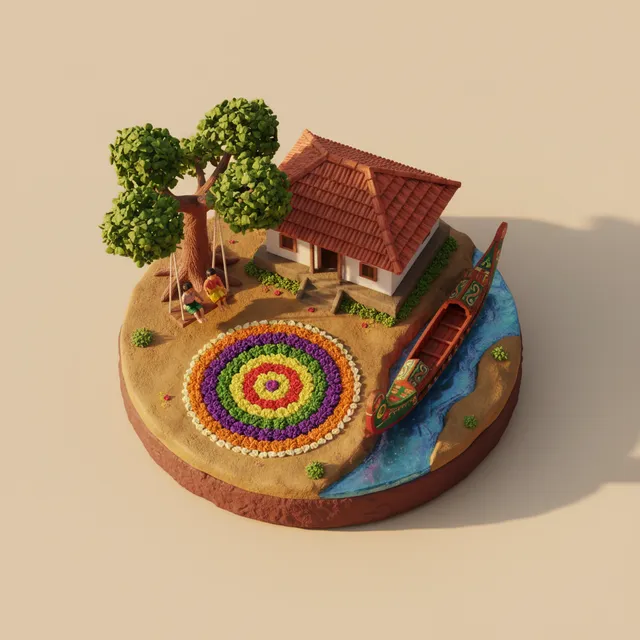
Kerala’s harvest festival welcomes the return of the mythical king Mahabali with ten days of flower carpets, boat races and the sadhya feast. It is the one celebration every Malayali home keeps, whatever its faith.

Second Saturday of August

Nehru Trophy Boat Race

Punnamada Lake, Alappuzha

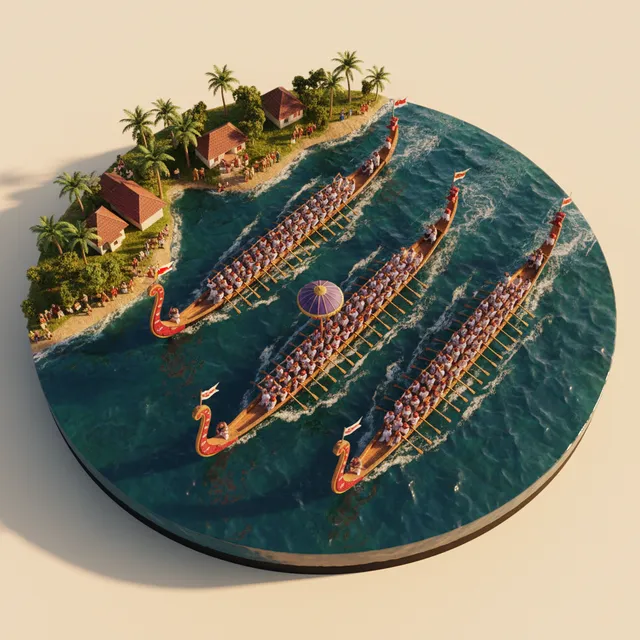
Chundan vallam snake boats over 30 metres long, each driven by more than a hundred rowers chanting in rhythm, race down Punnamada Lake. First rowed for Nehru in 1952, it remains the backwaters’ grandest spectacle.

November – April

Theyyam Season

Village shrines, North Malabar

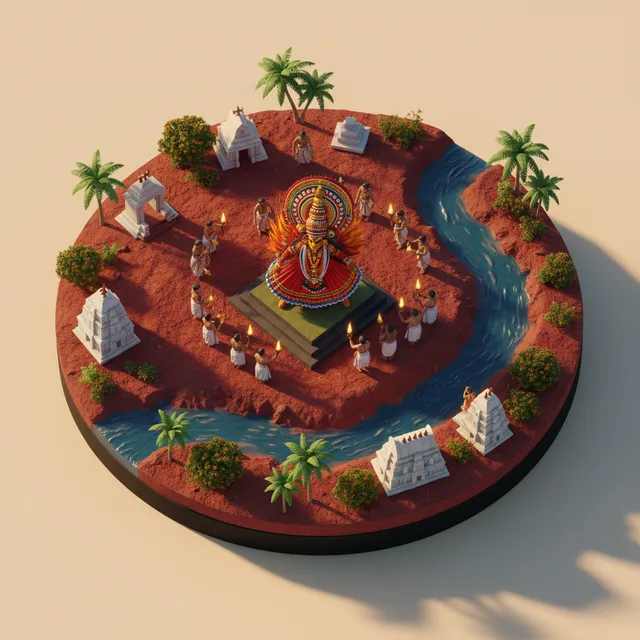
Through the dry months, shrine courtyards across North Malabar stage all-night Theyyam rites in which painted, towering performers are worshipped as the deity itself. It is among India’s most intense living ritual traditions.

December – April, alternate years

Kochi-Muziris Biennale

Fort Kochi & Mattancherry

India’s largest contemporary art exhibition takes over the spice warehouses and colonial halls of Fort Kochi for four months, drawing artists from across the world. The venues are half the show.

April

Vishu

Statewide

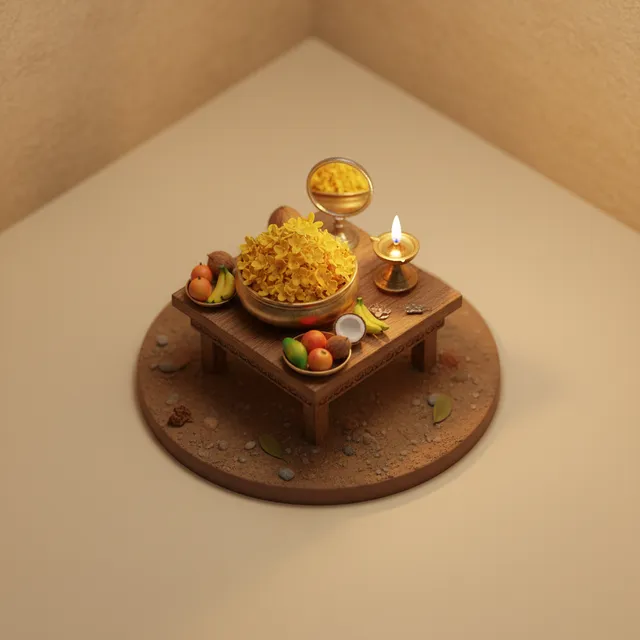
The Malayali new year opens before dawn with the vishukkani — an arranged tableau of golden konna blossoms, rice, coins and a mirror, kept as the first sight of the year. Elders press coins into younger hands, and firecrackers mark the morning.

April – May

Thrissur Pooram

Vadakkunnathan Temple, Thrissur

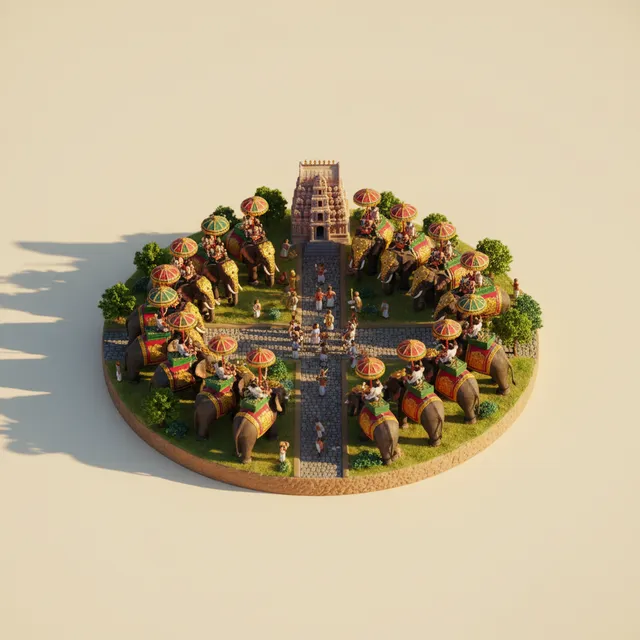
Kerala’s grandest temple festival fills the Thekkinkadu ground with two rival processions of caparisoned elephants, duelling percussion orchestras and a sequinned-parasol exchange, closing with fireworks before dawn. It has run in this form since the 1790s.

Choose your district

14 worlds, one Kerala

district navigator

The practical part

Know before you go

Essential travel information

When to come

October to March

Dry, bright and 24–32°C — peak season along the coast and in the hills. The June–September monsoon has its own devotees: green at its deepest, and the classic season for Ayurveda treatments.

Getting there

Four international airports

Thiruvananthapuram (TRV), Kochi (COK), Kozhikode (CCJ) and Kannur (CNN) line the coast, so no district is more than a few hours from an arrival gate. Trains and the coastal highway link everything between.

Getting around

Rail, road and water

Slow trains hug the coast, KSRTC buses climb the ghat roads, autos cover the last mile, and in Kuttanad the public ferry is genuinely the local bus — a few rupees for the best view in the state.

Language & money

Malayalam · English · ₹

Malayalam is the state language, and English is spoken nearly everywhere tourists go. Currency is the Indian Rupee; cards and UPI are widely accepted, but keep small notes for ferries, autos and chai.

Visas

e-Visa for most travellers

Citizens of 170+ countries can apply online for an Indian e-Tourist Visa and land at any Kerala international airport. Apply at least four days ahead; passports need six months validity.

Good to know

Safe, welcoming, unhurried

Emergency number 112 works statewide; the 24×7 tourist helpline is 1800-425-4747. Dress modestly at temples, carry rain cover from June to September, and let the pace of the backwaters set yours.

Fourteen districts are waiting

Begin at the southern tip